
水
The Old Master
Lao Tzu
Water, emptiness, enough. Win by refusing the fights that weaken you, and by never stopping.
“The soft beats the hard. Everyone knows this. No one can live it.”
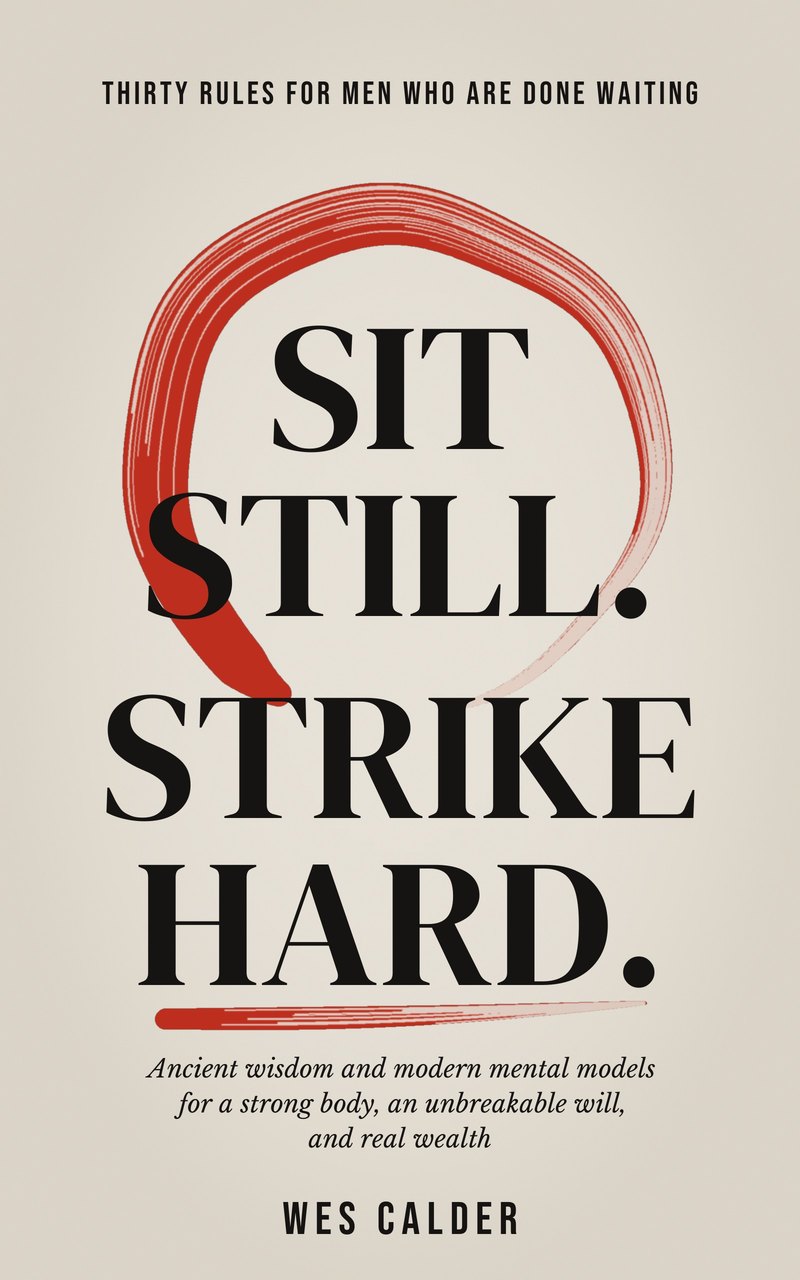
The Tao Te Ching, the Stoic slave Epictetus, Charlie Munger's mental models, and a measured dose of Machiavelli — forged into one practical code for a strong body, an unbreakable will, and real wealth.
He's thirty-four, and everybody says he's a nice guy. He says yes to everything and resents all of it. Twenty-eight pounds heavier than he was at twenty-five. Four thousand dollars of card debt he's "about to take care of." Bought the hot coin at the top, sold it at the bottom.
He has read the books. He has watched the videos. He is waiting for the right moment.
Call him the Frozen Man. He isn't too still — he's never still at all, a riot of reactions to every price, headline, craving, and slight. And he never truly strikes; he flinches. This book trades both for the real thing.
“You are no longer a youth, but already a full-grown man.”Epictetus, Enchiridion 51
Four teachers who never met. Each one alone will lead you astray. Together, they correct each other — the latticework Munger spent sixty years building.
Water, emptiness, enough. Win by refusing the fights that weaken you, and by never stopping.
“The soft beats the hard. Everyone knows this. No one can live it.”
Born a slave, lame in one leg, read by emperors and prisoners of war. Know what is yours to control.
“Of things some are in our power, and others are not.”
Latticework, inversion, incentives, margin of safety. Be consistently not stupid for a very long time.
Extreme patience, combined with extreme decisiveness.
The man who tells you the truth about other people, so you stop being prey.
“He must therefore be a fox to discern toils, and a lion to drive off wolves.”
Most of the time, do almost nothing. Then, when the moment is right, act with a force that surprises everyone — and don't apologize for it.
Patience is how you recognize the moment. Courage is how you use it.
The body, the will, investing, and wealth — built on an operating system of mental models that work the same way in all four.
“The bird that reacts to every crow can be provoked by any crow. Be wood.”Rule 16 · Be the Wooden Rooster
Epictetus said he didn't want to see an athlete's equipment — “Show me your shoulders.” Each chapter follows the same shape so you can act on it the same day.
Rules, each with a drillFrom “Build a Latticework” to “Plant Trees You Will Never Sit Under.”
The Ninety-Day CampaignThree phases: stop the bleeding, build the engine, strike.
Chapters of the Tao Te ChingFresh renderings made for this book after comparing 40+ translations.
Line Inversion AuditFind exactly where your body, will, and money are leaking.
Models in the LexiconMunger's latticework as a one-page checklist.
DomainsHealth, self-discipline, investing, and wealth — one way of thinking.
Thirty-one questions. Four scores. A map of where your strength is draining away — and which rule to start with.
Take the audit → PrintableFive questions to run before any decision over $100 or an hour. The first piece of your latticework.
Print the card → Free sampleThe Introduction and Rule 1, “Build a Latticework,” in full.
Start reading →Men who are agreeable to a fault, under-built physically and financially, and tired of knowing what to do without doing it. If you've read the self-help shelf and still feel stuck, it was written for you.
No. The cure for being a doormat isn't becoming a tyrant — that's just the Frozen Man's fantasy of his opposite. The men in this book weren't loud. What they shared was self-possession: a center of gravity that other people's moods, prices, and pressures couldn't knock over.
No. The investing rules are about temperament, not stock picks: how to stop Mr. Market from running your life, build a margin of safety, and let compounding work. For most readers the book's honest conclusion is simple, low-cost, and boring. Nothing here is personalized financial advice.
The Kindle edition is coming soon to Amazon. Until then, the Introduction and Rule 1 are free to read here, and the Inversion Audit and Council Card are free to use.
Epictetus, Marcus Aurelius, Seneca, Machiavelli, and Sun Tzu are quoted mainly in public-domain translations (George Long, W. A. Oldfather, R. M. Gummere, N. H. Thomson, Lionel Giles). The Tao Te Ching renderings are original to this book. Modern authors are quoted briefly, with attribution.
Pick one drill — the one that scares you most — and do the first step today.